


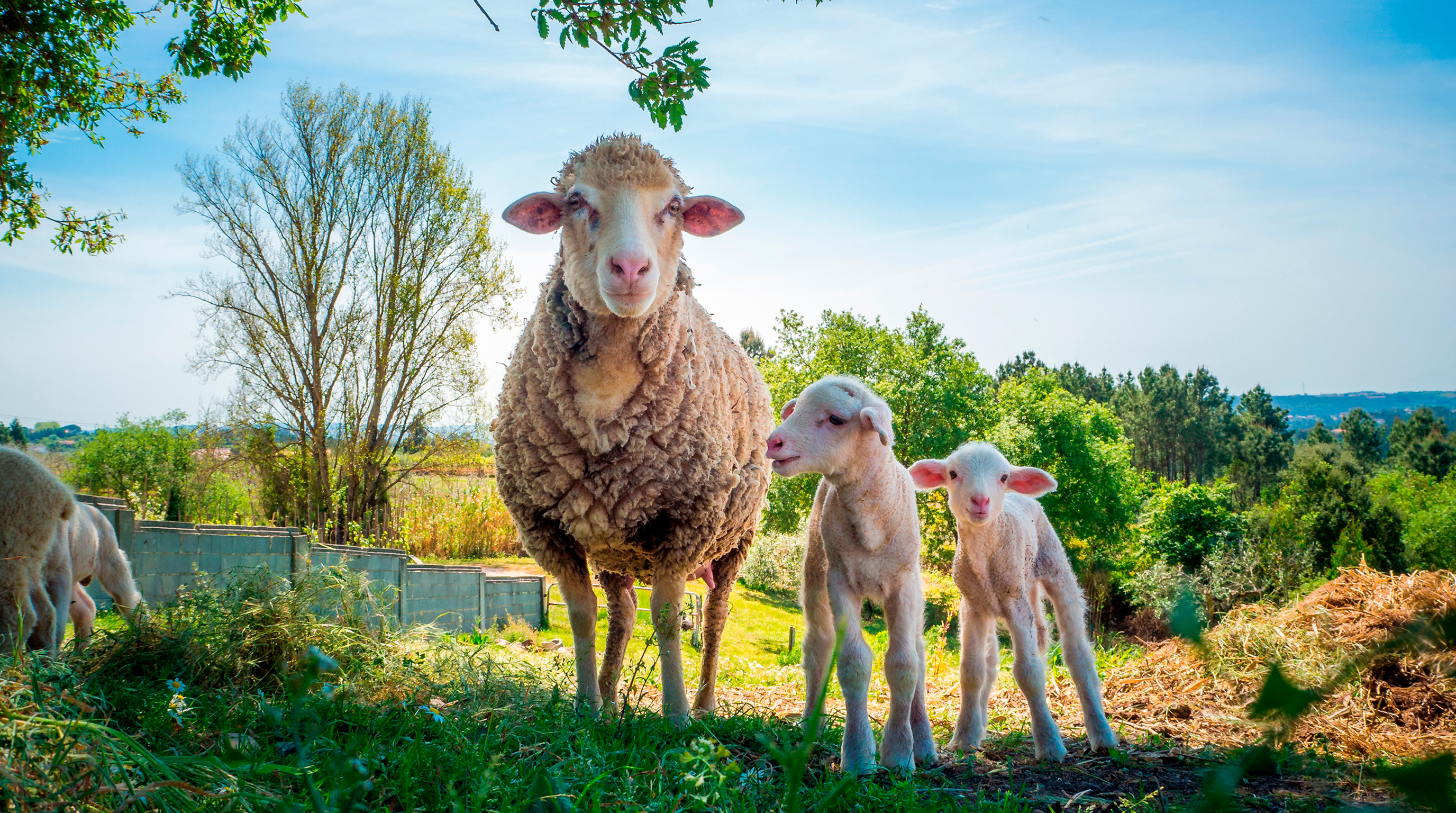
Feeding and Profitability: A Strategic Decision
On any farm, livestock feed is one of the main costs. But it is also one of the factors that most influences profitability.
Low-quality feed may seem cheaper in the short term, but it usually translates into uneven growth, digestive problems, or an increased use of treatments. All of this ultimately affects efficiency and, therefore, profit margins.
On the contrary, when we work with a balanced and well-formulated diet, we ensure that lambs grow uniformly, with fewer incidents and better feed utilization.
From our experience, the key lies in understanding feeding as an investment, not an expense.
Why Choose Organic Feeding?
Organic feed for lambs represents a different way of approaching animal nutrition. It is based on certified raw materials, free of synthetic chemicals or unnecessary additives, allowing us to work with a more natural and respectful foundation.
This has a direct impact on several aspects:
-
Improves feed digestibility.
-
Promotes better nutrient absorption.
-
Reduces stress at key moments such as weaning.
-
Contributes to a more balanced development.
Furthermore, as it is a cleaner form of feeding, digestive problems are minimized and the animal's immune system is strengthened.
More Efficiency, Fewer Problems
One of the most important points when talking about profitability is the feed conversion ratio. That is, how much feed the lamb needs to grow.
When the feed is well-formulated and of high quality, the animal makes better use of every ration. This means less quantity is needed to achieve better results.
Additionally, good nutrition significantly reduces health issues. Fewer digestive problems, less stress, and fewer treatments translate into a more efficient and profitable management.
It is not just about producing more, but about doing it better.
Practical Tips to Improve Feeding in Spring
If you are in the middle of the season or want to optimize your feeding system, these tips can make a difference:
-
Introduce feed progressively Especially during weaning, it is essential to avoid sudden changes. A gradual transition helps prevent digestive issues.
-
Adjust the ration according to the lamb's development Each phase has different needs. Adapting the quantity and type of feed is key to avoiding imbalances.
-
Combine pasture and feed in a balanced way Pasture is a valuable resource, but it does not always cover all needs. Feed must complement that base.
-
Observe animal behavior Changes in consumption, activity, or appearance can indicate that something is not working correctly.
-
Take care of hygiene and management Good feed loses its effectiveness if conditions are not appropriate. Clean feeding troughs and environmental control are essential.
An Opportunity to Stand Out in the Market
The demand for organic products keeps growing. More and more consumers value the origin of food, animal welfare, and environmental impact.
This opens up an opportunity for farms that choose more sustainable models. Organic feeding not only improves production but also allows positioning in a market with higher added value.
In this regard, feed becomes a key piece within the overall strategy of the farm.
A Different Way of Approaching Nutrition
At Bifeedoo, we work with the idea that good nutrition is the foundation of everything. That is why we develop organic solutions tailored to the real needs of the sheep sector, taking into account both animal welfare and farm profitability.
We know that every situation is different, and that is why we believe in a customized approach, where feeding is adapted to the type of farm, management, and the goals of each livestock farmer.
Want to Improve Your Farm's Profitability?
If you are considering taking the step toward organic feeding or want to optimize the nutrition of your lambs, at Bifeedoo we can help you find the best solution.
Having the right guidance can make the difference between maintaining the system or taking it to the next level.