


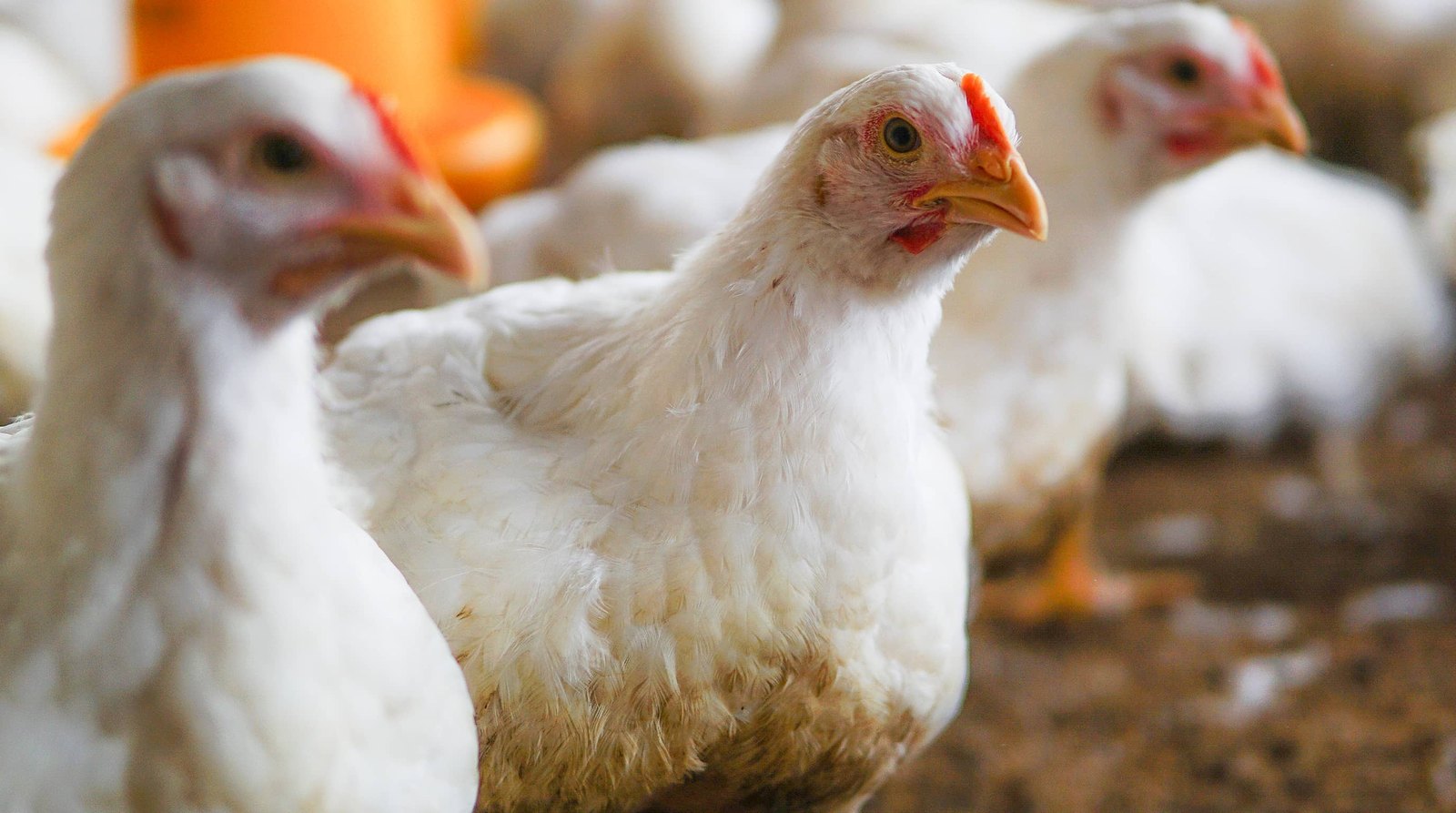
Summer is one of the most delicate times in chicken farming, where heat can directly affect the growth and welfare of the birds. We explain how to adapt feeding, which aspects to take care of and why organic feed for chickens is an effective solution to maintain productivity.
At Bifeedoo, we know that summer represents an important challenge in poultry production. High temperatures not only affect the environment, but also the behaviour and metabolism of chickens. Reduced feed consumption, increased heat stress and possible digestive alterations can have a direct impact on growth and flock uniformity.
For this reason, adapting feeding during this time of year is key. In our experience, the use of organic feed for chickens becomes one of the best decisions to maintain productive balance.
What happens to chickens in summer?
When temperatures rise, chickens tend to eat less. This is because their bodies try to reduce the generation of internal heat produced by digestion. However, this lower intake means that each ration must be much more efficient from a nutritional point of view.
In addition, heat stress can affect the digestive system, increase the feed conversion ratio and cause uneven growth among the animals. This not only impacts production, but also profitability.
In this scenario, feeding stops being just another factor and becomes a strategic tool.
Practical keys to feeding chickens in summer
Over time, we have worked with different farms and have found that there are a series of practices that make the difference during the hot months:
1. Choose high-quality and easy-to-digest feed.
In summer, chickens need to make the most of every intake. That is why it is essential to work with formulations that facilitate digestion and nutrient absorption. Organic feed for chickens, made with natural raw materials and without chemical residues, makes it possible to improve this efficiency.
2. Adjust feeding times.
A simple but very effective strategy is to offer feed during the coolest hours of the day. Early in the morning or at dusk, chickens show a greater appetite, which helps maintain a more regular intake.
3. Ensure fresh and abundant water.
Hydration is key in summer. Chickens increase their water consumption to regulate their body temperature, so it is essential to ensure a constant supply of clean and fresh water. This aspect is as important as feeding.
4. Maintain good environmental conditions.
Ventilation, humidity control and heat reduction in the facilities help minimise heat stress. Although it is not a measure directly related to feed, it has a decisive influence on its use.
5. Avoid sudden changes in the diet.
In hot conditions, any sudden change can generate digestive problems. For this reason, we recommend introducing any modification progressively.
Why choose organic feed for chickens?
From our experience, the use of organic feed for chickens provides clear advantages, especially in summer.
Firstly, its composition based on natural ingredients improves digestibility. This allows chickens, even with a lower intake, to meet their nutritional needs.
Secondly, organic formulations usually offer a better nutritional balance, which favours more uniform growth and reduces the appearance of digestive problems.
In addition, as they are free from chemical residues, they contribute to healthier development aligned with current market demands, where quality and traceability are increasingly valued.
More stable and sustainable production
One of the great challenges of summer is maintaining productive stability. Variations in growth or feed conversion directly affect results.
In this sense, balanced and adapted feeding makes it possible to reduce these fluctuations. We have found that, when working with quality raw materials and suitable formulations, it is possible to maintain greater flock uniformity, even in demanding conditions.
In addition, choosing organic feeding is also a strategic decision in the medium and long term. It makes it possible to move towards more sustainable production models, with a lower environmental impact and greater added value.
Our commitment at Bifeedoo
At Bifeedoo, we have been developing specific solutions for each type of production and each time of year for years. We know that not all farms are the same, and that is why we work closely, adapting our formulations to the real needs of each client.
Our objective is to help improve performance without compromising animal welfare or the environment.
If you are looking to optimise chicken feeding during summer, improve feed conversion or achieve more stable production, organic feed for chickens is an effective alternative.
To receive personalised advice or learn more about our solutions, you can contact our team. We will be delighted to analyse each case and offer the best option according to the production objectives.